My Projects
A collection of things I've worked on in the last years.

KVV Rauw
A fully responsive Web App made in Laravel and Tailwind CSS for the course SKIL2. The app features all the needs and requirements our client wanted for the soccer club.

KVV Rauw
This project involved developing a comprehensive, all-in-one management portal for KVV Rauw Sport Mol, a local football club. The goal was to modernize the club's operations by replacing fragmented systems with a unified web application designed to handle everything from player coordination to financial transactions.
Technical Skills
The application was built using the TALL stack (Tailwind CSS, Alpine.js, Laravel, and Livewire), which allowed for a highly reactive and modern user experience while maintaining a robust backend.
Workflow
The development followed the Scrum framework, featuring regular sprint cycles and client meetings to simulate a real-world professional environment. This emphasized agile collaboration, iterative feedback, and rigorous version control.
Contributions
I led the development of the secure in-site payment system and the core player management module, which streamlined team rosters and data tracking. To modernize the frontend, I refactored legacy hard-coded styles into a centralized Tailwind system, enabling a seamless site-wide dark mode and ensuring UI consistency. Additionally, I acted as a lead for quality assurance by conducting rigorous GitHub code reviews to maintain high architectural standards and professional best practices across the team's contributions.
MicroMatch
An innovative business idea for connecting businesses to content creators. This project focused on entrepreneurship, market research and making the perfect pitch.

MicroMatch
For the course "The Digital Startup," my team developed a complete business plan for an innovative entrepreneurial venture. Our idea was a matchmaking platform that connects small content creators with small-to-medium enterprises (SMEs). We wanted to help smaller brands find the perfect creators for their marketing by using a smart, category-based algorithm. The project was all about building a solid foundation for a real company from the ground up. We worked hard researching whether this idea was actually viable and how it would function in the real world.
New Skills
We did a deep dive into the financial and operational side of the business to see if it could actually turn a profit. This involved calculating startup costs, planning the logistics, and testing market interest through research. We focused heavily on the branding and positioning of the platform to make sure it appealed to both business owners and creative influencers. Every part of the business was mapped out, from the initial marketing strategy to the long-term growth plan. We wanted to make sure the "matchmaking" logic felt fair and effective for everyone involved.
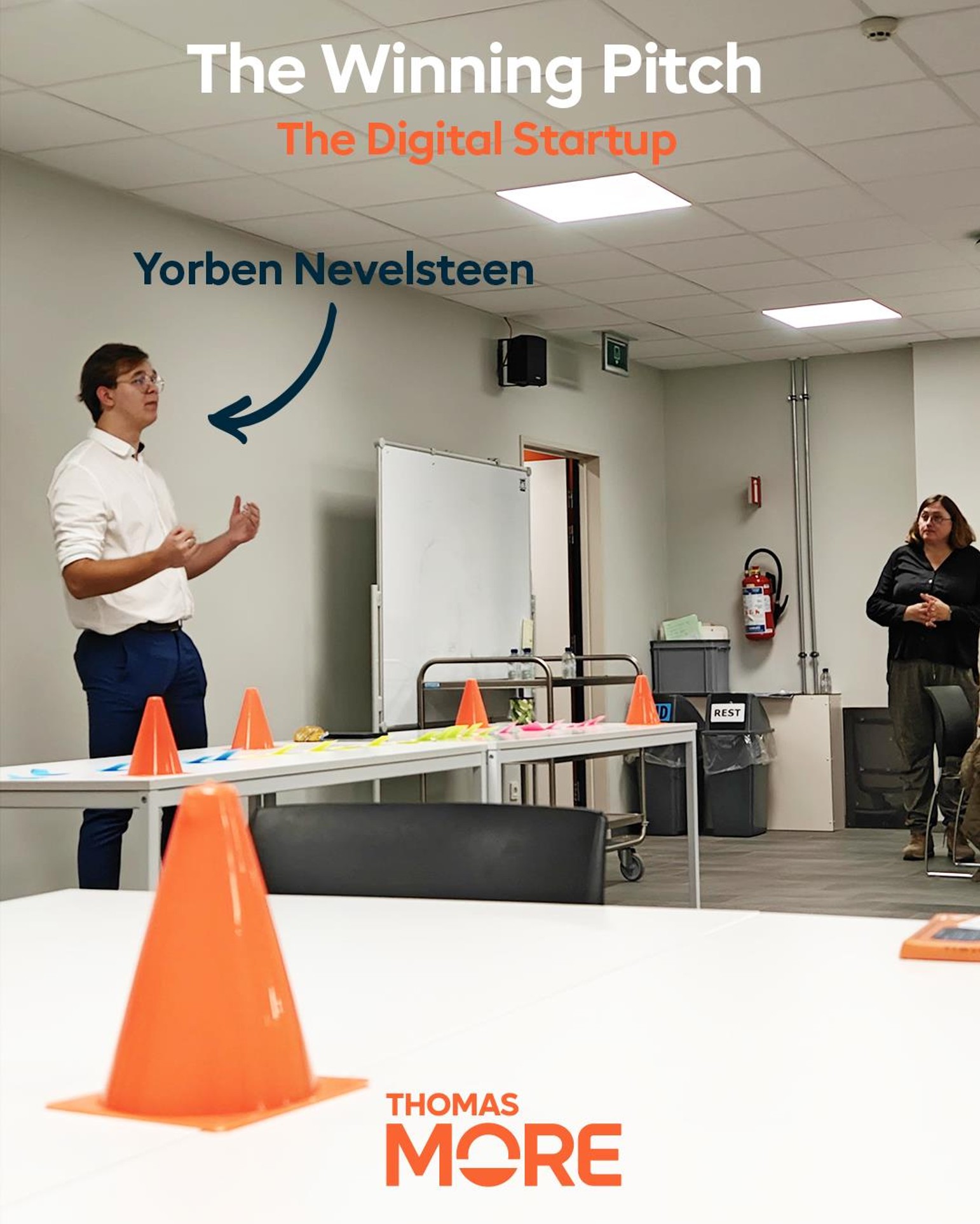
Depicted here is me doing my final presentation after being declared the winners of the event
Contribution
My main role was as the team's pitcher, and I represented us throughout the entire competition. I pitched our idea to a large audience of students and a professional jury, eventually winning the finals of the "Pitch Battle." Beyond the stage, I also worked on the branding and designed the logo to give our startup a professional look. I even took the initiative to contact a university in Nottingham that specializes in content creation. This helped us gather expert feedback on what creators actually want from a platform, making our final plan much more realistic.

Poutrel
An in-depth analysis and documentation of a Web App project and prototype building in Figma for the course SKIL2.

Poutrel
Project Poutrel was a massive analysis project for a real yoga and pilates studio. We had to dig deep into how their business works to plan a brand-new management tool. This project served as the blueprint for everything that would be built later. We focused on turning the client's daily tasks into a structured digital plan. It was basically our chance to act as IT consultants for a local business.
Technical Skills
We started by creating use case diagrams to visualize how users would navigate the site. Next, we built a detailed ERD to map out the database and how different data points connected. We also documented every single requirement to make sure no feature was forgotten. Finally, we built a high-fidelity prototype in Figma to show the client a "live" version of the app. This helped everyone visualize the final product without writing a single line of code.
Workflow
Our team used the SCRUM framework to manage the workload in organized sprints. We had regular "client" meetings with our teacher to show our progress and get feedback. These meetings helped us adjust our plans whenever the requirements changed. It was a great way to learn how to communicate technical ideas to someone else. SCRUM kept us focused and made sure we hit every deadline on time.
Contributions
I took the lead on the use cases for the trainer and administrator roles. I analyzed how these users would manage classes, schedules, and the overall studio backend. After the analysis, I built the Figma prototypes for these specific dashboards. I focused on making the admin tools feel intuitive and easy to navigate for the staff. My goal was to make sure the most complex parts of the system were user-friendly.
Gambit
A personal project where I explored the world of C# and Unity to create a simple game prototype. This project was made along with students 4 of PXL Music.
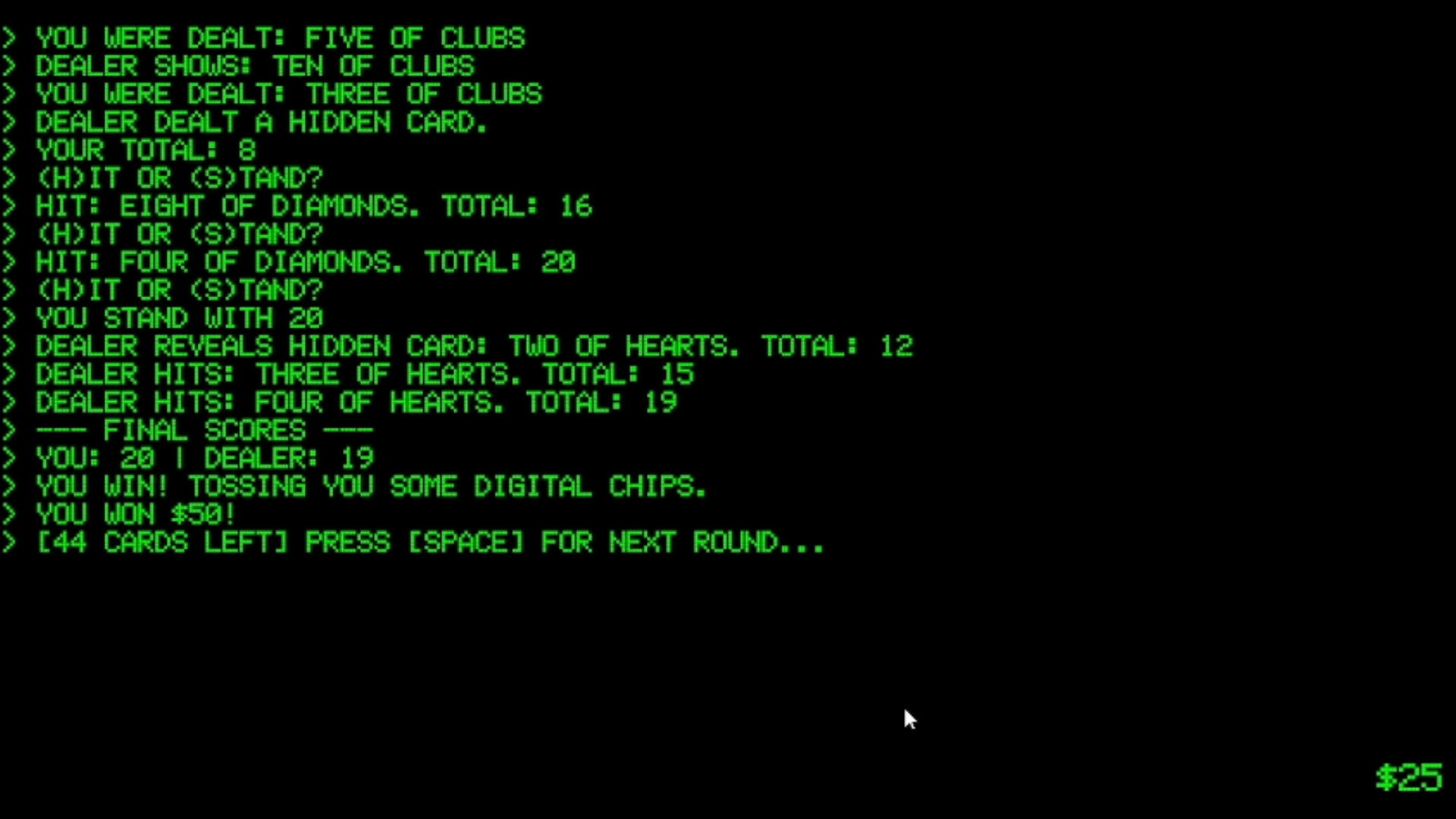
Gambit
This is an ongoing project of mine along with four students from PXL Music. In this project, I am developing a game in C# using Unity to push myself to better understand the language, to the point where it almost feels like a second language.
Project
I started this project at the request of a friend of mine who studies Drums at PXL Music. He and his classmates have an assignment where they need to create sound effects, music, and overall audio for a specific project and then conduct research on it. Because of this, my friend asked me if I could build a simple blackjack game so that they could design the sounds and music for it. I decided this was a perfect opportunity for me to polish my skills in a language I'm not familiar enough with yet.
Skills
For this project, I had to employ skills I learned at school, like development cycles and automated deployments via the cloud. This is not usually something I expected to do as an APPAI student, but it was necessary for this project. Some fun challenges came along with this, as all of the PXL students use Mac systems, and developing an application to run on both Mac and Windows was not as easy as I thought. In the end, I found this a perfect way to sharpen my C# skills and find new ways to use the language that we don't typically see in school.

Discovery Week
A project for the course IoT Essentials with a focus on exploring new technologies and building a prototype in a short time frame.

Discovery Week
During Discovery Week, my team and I had just a few days to experiment with emerging technologies and build a working prototype. We decided to create a unique side-scrolling game that combined traditional programming with AI-driven motion controls. The project was designed as a fast-paced challenge to push us outside our comfort zone and explore new tools. It was a great opportunity to collaborate on something creative while learning how to integrate different types of software.
Explanation
The game was built using Python's Pygame library for the core mechanics and Google’s Teachable Machine for the control system. Instead of using a keyboard, players controlled the character by moving their bodies in front of a webcam. By raising or lowering their arms, the AI would recognize the pose and trigger a jump in the game. This project gave me my first real taste of how game development and artificial intelligence can work together to create an interactive experience.
Contribution
For my contributions, I focused heavily on the software development of the game and helped train the AI model to recognize different arm positions. My biggest challenge was the final integration, where I was responsible for connecting the AI's output to the game's logic. I had to make sure the camera feed, the AI recognition, and the game character all functioned together smoothly in real-time. It was a rewarding experience that really sparked my interest in what is possible with modern programming.